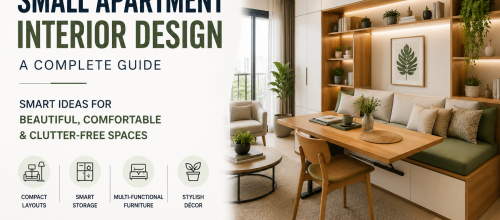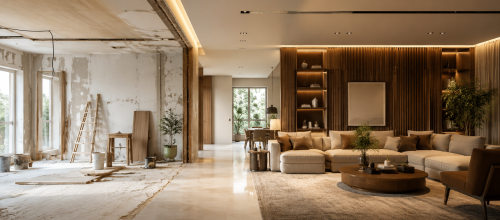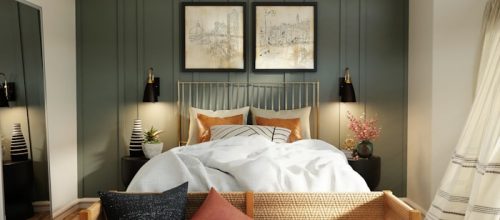
One of the most common questions I get from clients in Pune is: “Tejal, can you make this feel bigger?” Here’s the honest answer — and the 7 techniques I use on almost every project.

After designing 100+ homes across Pune — from compact studio flats in Hinjewadi to spacious villas in Koregaon Park — I’ve come to believe that space is more about perception than square footage. A 900 sq ft 2BHK can feel airy, open and generous. A 1,500 sq ft apartment can feel cramped and heavy. The difference is almost always in the design decisions, not the size of the property.
If you’re working with a 2BHK and dreaming of a 3BHK feeling, here are the 7 techniques I use on almost every smaller home project I take on.
1. Eliminate Visual Clutter With Built-In Storage
The single biggest killer of perceived space is visible clutter. Random furniture, mismatched shelves, items on countertops — every object your eye lands on makes the room feel smaller. My first move in any compact home is to design aggressive built-in storage: floor-to-ceiling wardrobes that disappear into the wall, under-bed drawers, TV units with closed cabinets below. When storage is invisible, the room breathes.
Tejal’s Tip
Push your wardrobes all the way to ceiling height. The gap between the top of a wardrobe and ceiling is wasted space that also visually “chops” the room. Floor-to-ceiling feels taller, cleaner, and gives you an extra 40–60% more storage without taking any additional floor area.
2. Use a Continuous Flooring Material Throughout
When every room has a different flooring — tiles in the kitchen, different tiles in the living area, wood in the bedroom — the eye sees boundaries everywhere. Those visual breaks make every space feel smaller and more segmented than it is. My recommendation: run one continuous material — a large-format tile (800×800 or 600×1200) or engineered wood — across the entire living, dining, and corridor. The eye travels uninterrupted. The apartment feels larger instantly.


3. Raise Your Curtains to Ceiling Height
This is one of the easiest and most underused tricks I know. Most people hang curtains at the window frame — which anchors the window to the wall and makes the ceiling feel low. Instead, mount your curtain rod at ceiling height (or as close as possible) and let the fabric fall all the way to the floor. Even if your window only goes up to 6 feet, ceiling-hung curtains with the rod at 9 feet will make that wall — and the entire room — feel dramatically taller.
“Space is more about perception than square footage. A 900 sq ft 2BHK can feel airy and generous. A 1,500 sq ft apartment can feel cramped. The difference is almost always in the design decisions.”
4. Choose Light, Neutral Wall Colours
I know bold accent walls are very popular on Instagram right now. But in a compact home, they’re often the wrong call. Dark or saturated colours absorb light and make walls feel like they’re closing in. My preference for small homes is a warm neutral palette — off-whites, warm greiges, soft taupes — that reflects light around the room. If you want depth and interest, add it through texture (fluted panels, textured wallpaper, limewash finishes) rather than dark colour.
5. Multi-Function Furniture Is Non-Negotiable
In a 2BHK, every piece of furniture should earn its place. A dining table that extends when guests arrive. An ottoman with hidden storage inside. A sofa with a pull-out bed for guests. A study desk that folds against the wall. These aren’t compromises — when designed properly, they’re simply smarter. I work with my clients to map out every function they need from a space, then design furniture that serves multiple roles without the home feeling “converted.”
Tejal’s Tip
The most underused piece of furniture in small Indian homes is the extendable dining table. A 4-seater that extends to 8 costs around the same as a fixed 6-seater, takes up significantly less daily space, and actually functions better for the life you live — not the life you think you should have.
6. Create Zones With Rugs and Lighting, Not Walls
The instinct when a home feels cramped is to create more walls — separate the study from the living room, close off the dining area. More often, the opposite is the right move. An open plan layout with clearly defined zones — a rug under the dining table, a pendant light over it, a different ceiling treatment in the living area — creates the feeling of multiple distinct spaces without the visual weight of walls. The home feels larger and more intentional at the same time.
7. Mirrors — But Placed With Intent
Mirrors are powerful tools for making a room feel bigger — but only when placed thoughtfully. A mirror that reflects a blank wall does very little. A mirror that reflects a window, a beautiful plant, or a well-styled shelf doubles the visual richness of the room. I typically use one large statement mirror in the living area, positioned to reflect natural light from the windows, and sometimes a full-length mirror in a corridor to extend the perceived depth.
The Takeaway
Making a 2BHK feel like a 3BHK isn’t about spending more money or tearing down walls. It’s about making intentional decisions — about storage, materials, colour, light, and furniture — that work together to create a sense of space that goes beyond the actual square footage. These are the kinds of decisions I work through with every client from the very first consultation.
If your current home feels smaller than it should — if you’re constantly bumping into furniture, struggling for storage, or just feeling like your space doesn’t reflect the life you want — let’s talk. A free 30-minute call with me might be all it takes to see your flat in a completely different way.